If your rotary tablet press is destined for a European pharmaceutical facility, GMP compliance isn't optional — it's the gatekeeper to market access. Yet many equipment buyers only discover compliance gaps after the machine arrives on-site, when the validation team flags missing documentation or design flaws that can't be retrofitted.
This checklist covers 12 critical GMP compliance points every tablet press buyer should verify before purchase — based on EU GMP Annex 1 (2022 revision), ISO 14644 (cleanroom standards), and real-world audit experience across 40+ European pharmaceutical sites.
Why This Matters for European Buyers
Since the 2022 revision of EU GMP Annex 1, tablet press compliance requirements have tightened significantly — especially around cleanability, material traceability, and data integrity. Non-compliant equipment can trigger audit findings, production halts, and costly retrofits.
Part 1: Material & Construction Compliance
Contact Part Material Certification (316L or Better)
All product-contact surfaces must be constructed from 316L stainless steel (or equivalent) with proper material certification documenting chemical composition and surface finish.
What to verify:
- EN 10204 3.1 material certificate for all contact parts (turret, punches, dies, feed frame, discharge chute)
- Surface roughness: Ra ≤ 0.8 μm for product-contact surfaces (Ra ≤ 0.4 μm for WFI-contact parts)
- No galvanic corrosion risk at mating surfaces
- Non-porous surface finish (electropolished preferred for EU audits)
Non-Contact Part Design (No Dead Spaces)
GMP-compliant tablet presses must eliminate dead spaces where powder can accumulate and contaminate subsequent batches.
Design requirements:
- Hollow frames must be sealed or eliminated
- Cable routing must avoid horizontal surfaces where dust settles
- Minimize crevices, threads, or fasteners in product zone
- Smooth, cleanable surfaces throughout (no rivets, no exposed threads)
Lubrication System (Food-Grade & Isolated)
Tablet press lubrication must not contaminate the product zone. Grease migration is a common audit finding.
Compliance requirements:
- All lubricants must be food-grade (NSF H1) certified
- Lubrication points must be isolated from product zone (sealed bearings, grease nipples outside containment)
- Automatic lubrication system preferred (reduces manual intervention)
- Lubricant contact log required for changeovers
Part 2: Cleanability & Validation
Tool-Free Disassembly (IQ/OQ/PQ Validation)
European GMP requires documented validation of cleaning procedures. If disassembly requires tools, validation becomes inconsistent and audit-unfriendly.
What to look for:
- Tool-free removal of feed frame, discharge chute, and product hopper
- Quick-release punches and dies (bayonet or clamp system)
- Access panels with ergonomic handles (no screwdriver required)
- Cleaning validation protocol provided by manufacturer
Wash-in-Place (WIP) or Clean-in-Place (CIP) Compatibility
For high-potency or multi-product facilities, manual cleaning isn't sufficient. WIP/CIP capability is increasingly required for European GMP compliance.
Design features:
- Spray ball compatibility in product zone
- Drainage slopes ≥ 1° to prevent water pooling
- Sealed electrical components (IP65 minimum for product zone)
- WIP validation protocol (swab samples, TOC limits)
Containment & Cross-Contamination Control
EU GMP Annex 1 (2022) significantly tightened requirements for cross-contamination control, especially for high-potency APIs.
Compliance features:
- Pressure differential control (negative pressure in product zone vs. surrounding area)
- HEPA filtration for exhaust air (H14 grade, 99.995% efficiency)
- Dedusted tablet discharge with contained transfer (closed system preferred)
- Operator protection (glove ports, isolator compatibility for OEB 4-5 products)
| OEB Level | Required Containment | Tablet Press Feature |
|---|---|---|
| OEB 1-2 | Basic | Standard dust extraction |
| OEB 3 | Intermediate | Negative pressure + HEPA |
| OEB 4-5 | High | Isolator-compatible design |
Part 3: Documentation & Traceability
FAT/SAT Protocol & Documentation Package
European buyers typically require a comprehensive documentation package for validation. Missing documents are the #1 cause of delayed market approval.
Required documentation:
- FAT protocol (Factory Acceptance Test — performed at manufacturer's site)
- SAT protocol (Site Acceptance Test — performed at buyer's site)
- IQ/OQ/PQ templates (Installation/Operational/Performance Qualification)
- Drawings: general arrangement, utilities, spare parts list
- Certificate of Conformance (CoC) for all components
Spare Parts Traceability & Long-Term Availability
GMP facilities must document spare parts sourcing for 10+ years. If your tablet press uses proprietary parts with no traceability, you'll fail audits.
What to verify:
- Spare parts list with unique part numbers and specifications
- Manufacturer commitment to supply parts for minimum 10 years
- Alternative sourcing options (generic punches/dies vs. proprietary)
- Wear parts lifecycle documentation (when to replace punches, bearings, seals)
Part 4: Data Integrity & Automation
Data Integrity Compliance (ALCOA+ Principles)
Since 2016, European GMP inspections rigorously audit data integrity. Your tablet press must generate audit-compliant records.
ALCOA+ compliance requirements:
- Attributable: User login with role-based access control
- Legible: Electronic records with clear timestamps
- Contemporaneous: Real-time data capture (no manual logbooks)
- Original: Secure electronic records (no handwritten batch sheets)
- Accurate: No ability to modify historical data without audit trail
Technical requirement: 21 CFR Part 11 compliance (electronic signatures) or EU GMP Annex 11 equivalent.
Critical EU GMP Annex 11Batch Reporting & Electronic Batch Record (EBR)
Modern European pharma facilities require Electronic Batch Records integration. Manual data entry is increasingly unacceptable.
EBR-compatible features:
- Automatic capture of compression force, tablet weight, turret speed per batch
- Integration with MES (Manufacturing Execution System) via OPC-UA or MQTT
- Batch report generation with audit trail (who operated, parameter changes, alarms)
- Data export in CSV/PDF with digital signature capability
Part 5: Quality Control & In-Process Testing
In-Process Weight Control & Rejection System
EU GMP requires documented weight control with automatic rejection of out-of-spec tablets. Manual weight checking isn't sufficient for high-volume production.
Compliance features:
- Real-time weight monitoring (load cells or force transducers)
- Automatic rejection of underweight/overweight tablets (with rejection count tracking)
- Control chart generation (X-bar and R-chart) for statistical process control
- Alarm thresholds with automatic machine stop on sustained out-of-spec condition
Typical specifications for EU compliance:
| Parameter | Typical Requirement | YohoAI TP Series |
|---|---|---|
| Weight control accuracy | ±2-3% of target | ±1.5-2.5% |
| Rejection rate tracking | Mandatory | Per-batch report |
| Force monitoring | Recommended | Standard (TP-55 model) |
Cleaning Validation Swab Sampling Protocol
European auditors will request evidence that your cleaning procedure effectively removes previous product residues. Your tablet press must be designed to facilitate swab sampling.
Design requirements:
- Accessible surfaces for swab sampling (no confined spaces)
- Smooth surfaces without crevices where residue can hide
- Documented cleaning validation protocol with acceptable residue limits (typically 10-50 ppm, depending on product potency)
- TOC (Total Organic Carbon) swab test compatibility
Quick Compliance Scorecard
Use this scorecard to evaluate suppliers. Score ≥ 10/12: Suitable for European GMP facilities. Score < 8/12: High risk of audit findings.
| Checklist Item | Weight | Your Supplier's Score (0-2) |
|---|---|---|
| Material certification (316L, Ra ≤0.8μm) | Critical | ___/2 |
| No dead spaces in product zone | Critical | ___/2 |
| Food-grade lubrication, isolated | Critical | ___/2 |
| Tool-free disassembly | Recommended | ___/2 |
| WIP/CIP compatibility | Recommended | ___/2 |
| Containment (OEB 3-5 compliance) | Critical | ___/2 |
| FAT/SAT protocol provided | Critical | ___/2 |
| 10-year spare parts availability | Recommended | ___/2 |
| Data integrity (ALCOA+) | Critical | ___/2 |
| EBR/MES integration ready | Recommended | ___/2 |
| Weight control & auto-rejection | Critical | ___/2 |
| Cleaning validation support | Critical | ___/2 |
| Total Score | ___/24 |
YohoAI Tablet Press GMP Compliance
All YohoAI TP-series rotary tablet presses are supplied with full EU GMP documentation package (FAT/SAT, IQ/OQ/PQ templates, material certificates, spare parts list). Data integrity compliance (Annex 11) and containment options (OEB 3-5) available on request.
Need a GMP-Compliant Tablet Press for the European Market?
YohoAI TP-series rotary tablet presses are designed for European GMP compliance — with full documentation package, data integrity features, and containment options. Request a compliance consultation and documentation sample.
Request GMP Documentation SampleRelated Equipment
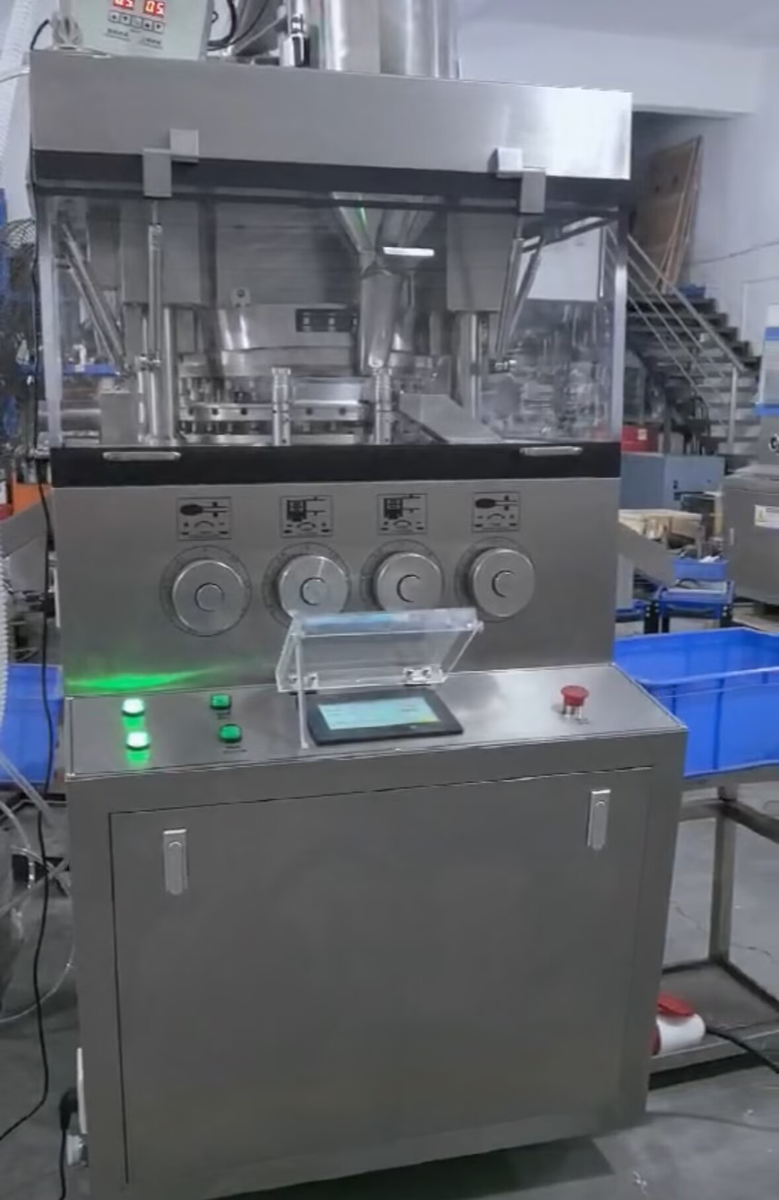
TP Series Rotary Tablet Press
15-station to 55-station | GMP-compliant | Data integrity ready | CE & ISO certified
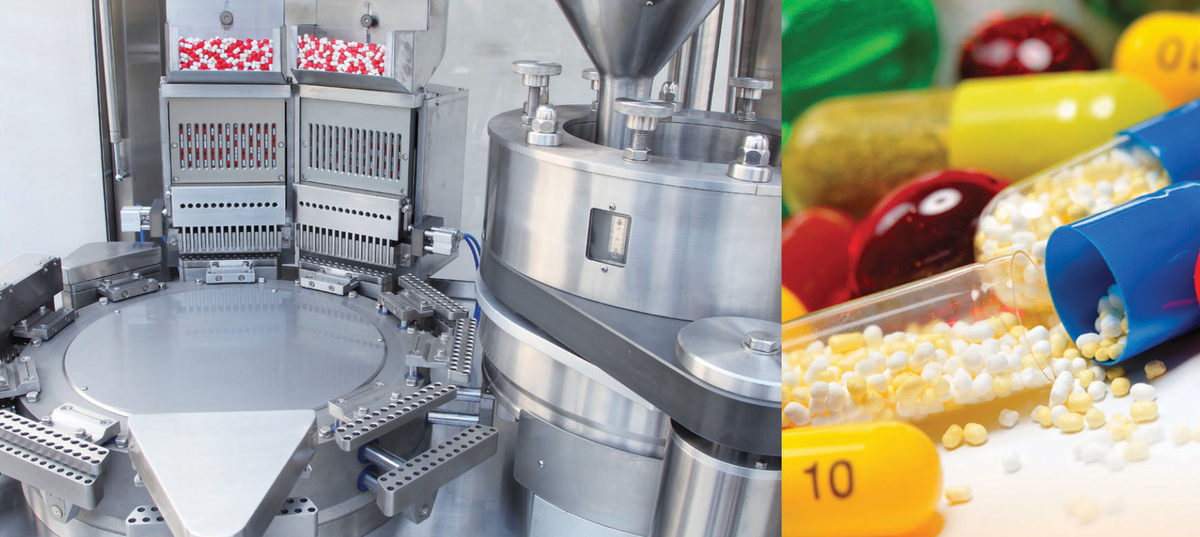
Hard Capsule Filling Machine
EU GMP compatible | Powder, pellet, liquid filling | 50,000–200,000 caps/hr
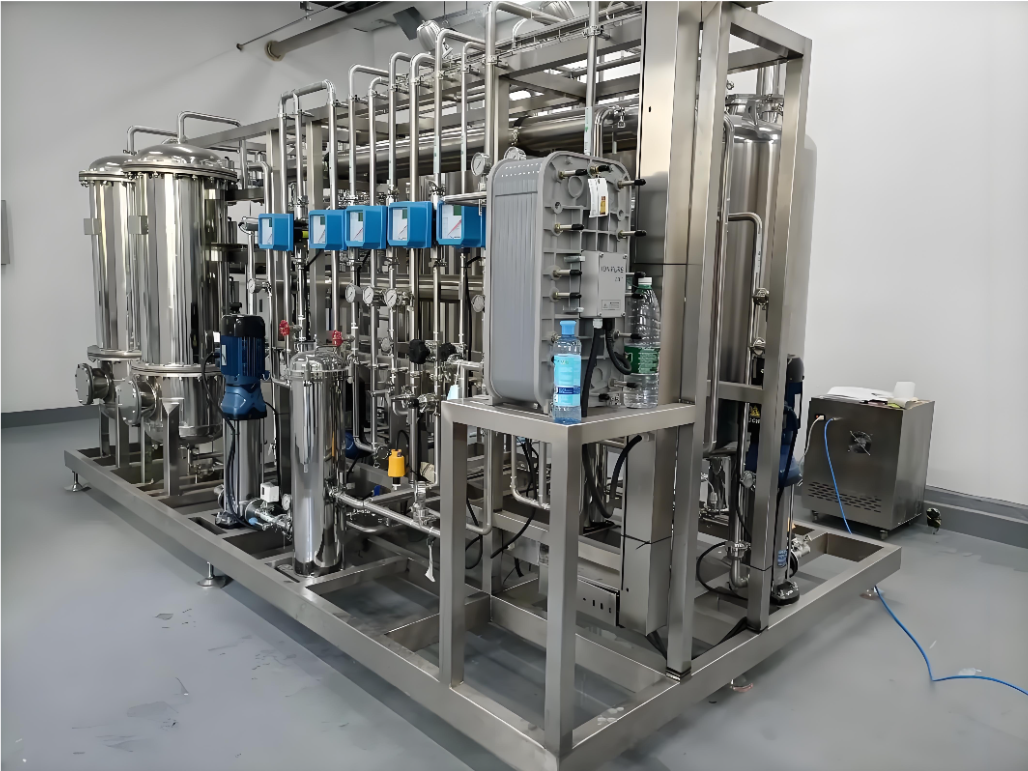
PW Series Purified Water System
GMP-compliant WFI-quality water | EU GMP Annex 1 compatible | TOC monitoring